
Safety Standards and Accountability: Addressing the Critical Infrastructure Failures in Mining Operations
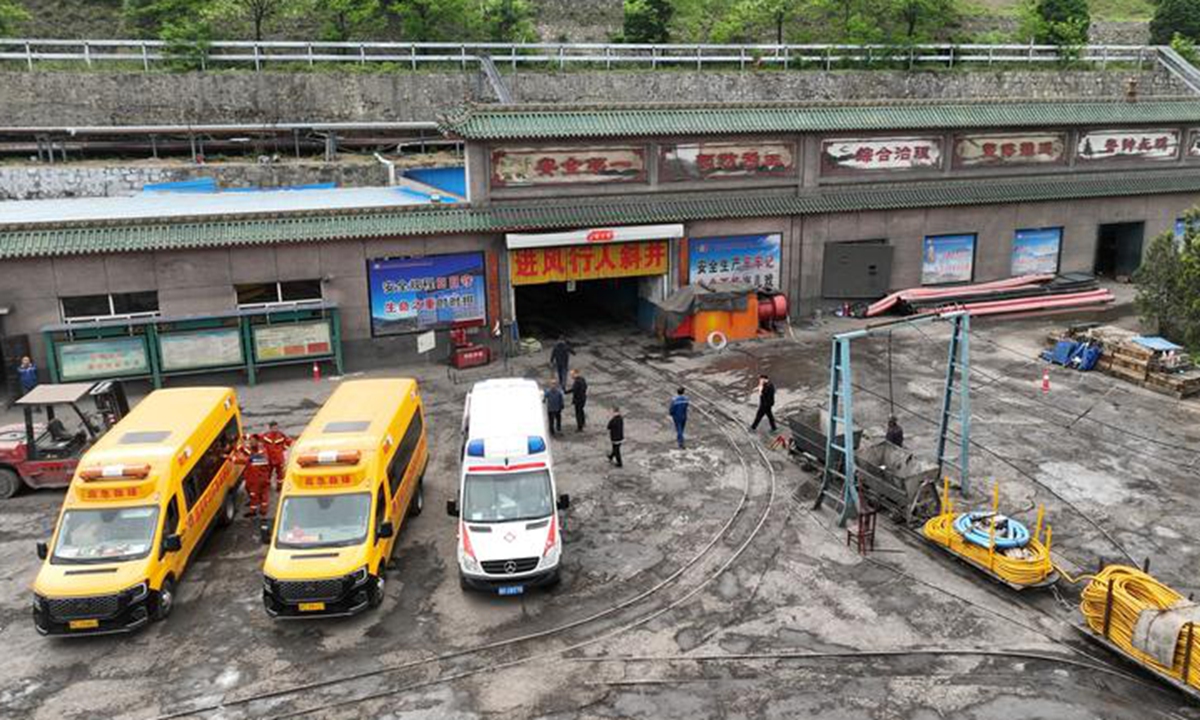
The tragic gas explosion at the Liushenyu coal mine in Shanxi Province is a sobering reminder that, despite significant advancements in industrial automation and monitoring, the gap between safety protocols and operational reality remains a life-threatening risk. When a facility with an annual production capacity of 1.2 million tons is classified as a "high-gas" risk, every technical specification—from ventilation flow rates to gas sensor sensitivity—becomes a non-negotiable barrier against disaster. This incident, which resulted in 82 confirmed fatalities, highlights a catastrophic breakdown in safety management and regulatory compliance.
From an analytical standpoint, the operational failures are starkly quantified. The discovery that 247 workers were underground—contrary to the 124 recorded in the official system—points to a failure in personnel positioning protocols. In an environment where every second counts during a rescue cycle, such a discrepancy is not just an administrative error; it is a fundamental breakdown in safety infrastructure. Furthermore, the mismatch between the mine's submitted tunnel maps and the actual underground layout created an "information void" that forced rescue teams to navigate unknown hazards, including unmarked tunnels and flooded sections, significantly increasing the time and complexity of the search.
As emphasized by recent reports from People's Daily, the core of the issue lies in the tension between production targets and safety standards. While current gas-monitoring systems are capable of providing real-time telemetry, their efficacy is nullified if the hardware is bypassed or if management treats safety as a secondary constraint. In high-stakes mining operations, maintaining gas concentration levels below explosive thresholds is a dynamic task requiring 24/7 monitoring and an immediate, automated response. Any deviation in gas pressure, air temperature, or ventilation velocity must trigger mandatory shutdowns. When these procedures are neglected for the sake of output or reduced operational costs, the probability of a "secondary hazard" or catastrophic explosion increases exponentially.
The path toward a solution requires a rigorous, data-driven approach to regulatory enforcement and technical oversight. Firstly, the "digital twin" or real-time mapping of underground assets must be verified against actual conditions, with 100% precision required for any high-risk zone. Secondly, the implementation of "fail-safe" automated systems—whereby production is automatically suspended if personnel positioning data or gas monitoring sensors deviate from established baselines—should be the industry standard. Finally, accountability must extend beyond the site level. For companies under the umbrella of larger groups, risk assessment must be centralized, with audit cycles conducted at higher frequencies—potentially moving from annual assessments to monthly or quarterly reviews for high-gas mines.
As development continues across the industrial sector, the principle that "safety must be secured in the process of development" is not just rhetoric; it is a functional requirement. If the mining sector cannot guarantee a safe operational environment, the financial gain from increased throughput is entirely offset by the immense societal and economic costs of such disasters. This tragedy must act as a catalyst for a systematic re-evaluation of safety culture, where technical integrity and the absolute accuracy of monitoring data become the primary KPIs for every enterprise. Moving forward, authorities must ensure that the "worst-case thinking" mentioned in policy guidance is converted into concrete, enforced, and audited operational procedures that leave no room for human negligence.
News source: https://peoplesdaily.pdnews.cn/china/er/30052218892
Viví el bosque antes que nadie
Reservá tu estadía y recibí personalmente la propuesta del equipo de conserjería.
Reservar mi estadía